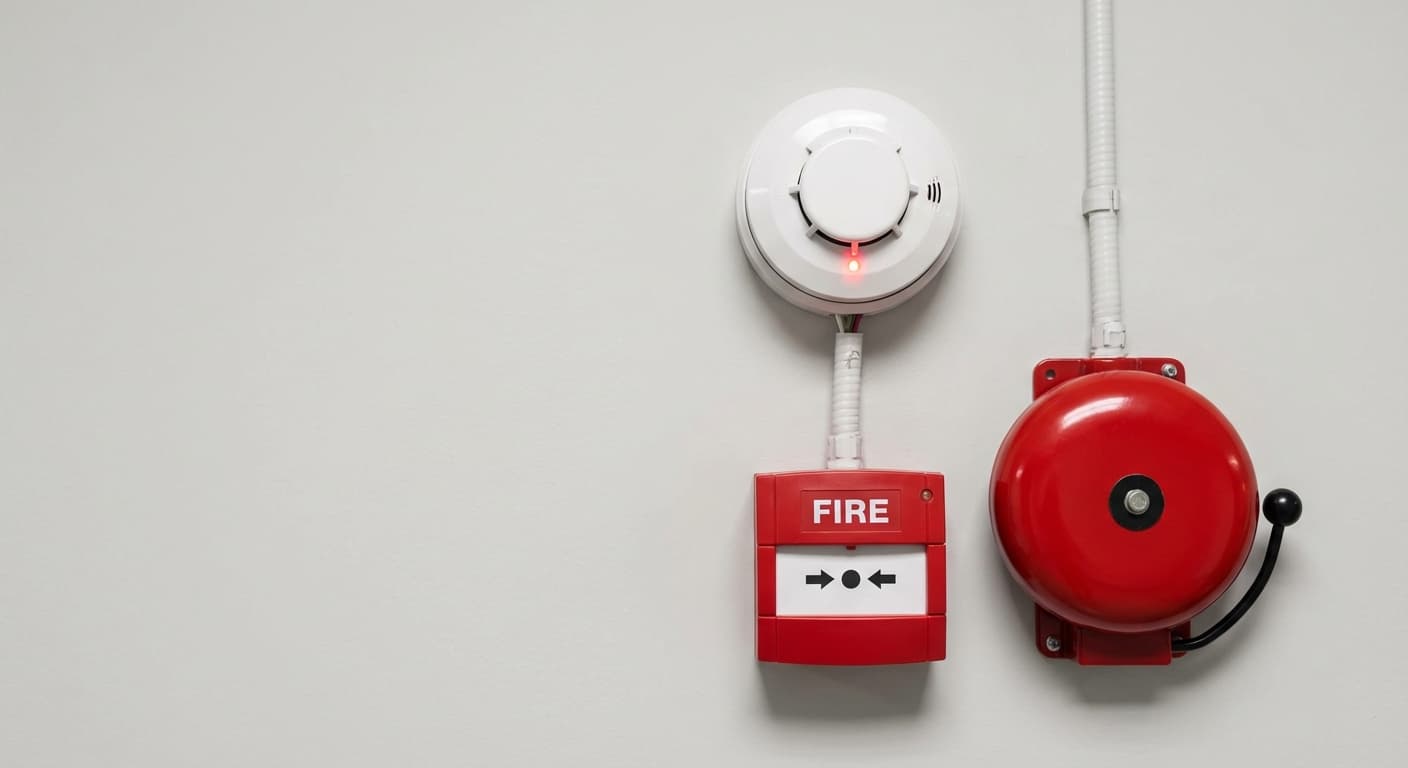
Fire prevention is not an option; it is a legal and ethical necessity to protect lives and property. At Alkashef Al-Sareea, we offer integrated Fire Alarm & Firefighting services fully compliant with the Jordanian Building Code (JBC) and Civil Defense regulations, ensuring you obtain the "Public Safety Certificate" required for licensing commercial, industrial, and large residential facilities.
Why a Fire Alarm System is a Necessity, Not a Luxury
Statistics indicate that 80% of fire fatalities occur at night when residents are asleep and cannot smell smoke. Additionally, the first few minutes of a fire are the most critical for survival—fires double in size every 30 seconds in the early stages.
- Early Detection: Saves lives and reduces material losses by over 90%.
- Immediate Alert: Gives occupants sufficient time for safe evacuation.
- Automatic Link: Ensures Civil Defense arrives even if the building is empty.
Smoke Detector Types: The Right Technology for the Right Place
Many don't realize there are different technologies for detecting smoke and fire, and choosing the wrong one can delay alarms or cause annoying false triggers. We help you choose the appropriate technology:
1. Photoelectric Smoke Detectors
Work by projecting a light beam inside the sensing chamber. When smoke particles enter, light scatters and hits the sensor, triggering the alarm.
- Advantages: Best for detecting smoldering fires that produce thick smoke (like upholstered furniture or electrical cable fires).
- Ideal Locations: Bedrooms, halls, offices, corridors.
- Bonus: Less prone to false alarms from cooking steam.
2. Ionization Smoke Detectors
Contain a tiny amount of radioactive material that ionizes air inside the sensing chamber. When smoke enters, the ionization process is disrupted, triggering the alarm.
- Advantages: Extremely fast at detecting fast-flaming fires and highly flammable materials (like paper and flammable liquids).
- Ideal Locations: Warehouses, archives, laboratories.
3. Heat Detectors
Don't rely on smoke detection; instead, they monitor ambient temperature and trigger in two cases:
- Fixed Temperature: When temperature reaches a specific point (typically 57°C or 68°C).
- Rate-of-Rise: When temperature rises abnormally fast (more than 8°C per minute).
Ideal Locations: Commercial kitchens, dusty areas, garages, boiler rooms—where smoke detectors aren't suitable.
4. Beam Detectors
Used in large spaces with high ceilings (warehouses, malls) where they project a light beam across the space; any interruption by smoke triggers the alarm.
Jordanian Building Code (JBC) Requirements for Fire Systems
The JBC mandates strict specifications for commercial, industrial, and high-rise residential facilities, including:
- Detector Distribution: Each covering no more than 60-90 square meters (depending on ceiling height and environment).
- Addressable System: Mandatory for large facilities to pinpoint fire location to the exact room or zone.
- Direct Link: To security monitoring center ensuring automatic notification to Civil Defense (911).
- Manual Call Points: At all emergency exits.
- Sirens and Strobe Lights: Audible and visible throughout the building.
- Backup Batteries: Operating for at least 24 hours during power outages.
Available Automatic Firefighting Systems
Sprinkler System
Most common in commercial buildings. Each sprinkler operates independently when temperature reaches a specific point, automatically limiting fire spread.
FM-200 Clean Agent System
Ideal for server rooms and data centers where fire must be extinguished without damaging electronic equipment with water.
CO2 System
For commercial kitchens and industrial areas containing flammable liquids.
Proactive Action Plan: What to Do When the Alarm Sounds
We provide more than just hardware; we train your staff on the complete emergency protocol:
- Quick Assessment: Confirm whether the alarm source is real or false.
- Organized Evacuation: Use emergency exits and designated assembly points.
- Reporting: Communicate with our operations room and Civil Defense.
- Extinguisher Use: Only for small fires that can be controlled.
Frequently Asked Questions About Fire Alarm Systems
What's the difference between Conventional and Addressable systems?
In a Conventional system, the panel knows there's an alarm in "Zone 3" for example (which might include 20 detectors). An Addressable system identifies exactly which detector triggered the alarm, saving valuable time in locating the fire.
How often should the system be inspected and maintained?
Per Jordanian Building Code: monthly visual inspection of devices, quarterly functional testing, and annual comprehensive maintenance including detector cleaning and battery testing.
Can the fire system be linked to the building's sound system?
Yes, we provide EVAC (Voice Evacuation System) solutions that broadcast recorded or live voice messages to guide staff during emergencies.
We provide periodic maintenance and inspection contracts ensuring batteries and sensors are clean and 100% efficient. Your safety and that of your employees and customers is our most important investment.
Need a fire alarm system compliant with building code? Contact us today for a free assessment and comprehensive quote.